

A fleet’s biggest blind spots often appear between dispatch and return. GPS fleet tracking in Zimbabwe gives businesses a clearer view of vehicle movements and activity, helping managers monitor fuel use, identify idle time and coordinate daily operations. It can support fleets across sectors, from delivery and field services to freight and agriculture.
Location data is most useful when it helps managers make practical decisions. This article explains how tracking can support different Zimbabwean industries and what businesses can learn from vehicle activity, fuel patterns and idle periods. It also covers the key capabilities to consider, how tracking works in daily operations and how to choose a system. Use this guidance to improve oversight, plan routes and manage vehicle use across your fleet.
Key Takeaways
- Match fleet oversight to the work vehicles do, from deliveries and field services to freight and agriculture.
- Use fuel records and idle-time patterns to spot operational habits that may be affecting vehicle use.
- Choose tracking capabilities around the visibility and reporting your fleet needs, rather than assuming every system works the same way.
- Plan installation around vehicle types, tracker placement and clear fleet records so the system can support daily operations.
Fleet management across Zimbabwean industries
Zimbabwean fleets travel urban routes, rural roads and regional corridors. Choose tracking practices that reflect each vehicle’s task, route and operating conditions.
Vehicle tracking raises privacy and data-handling questions. Set a clear purpose, tell drivers how location data is used, restrict access and follow Zimbabwe’s relevant privacy and data-protection requirements.
Different sectors need different oversight. A farm can compare vehicle movements between fields and depots, while a delivery operator can review stops and route progress. The Beit Bridge border post connects Zimbabwe to South Africa on the N1 highway and handles transit freight for Zambia, the Democratic Republic of the Congo, Malawi and Mozambique. For operators on that corridor, tracking can help managers follow vehicle movements across a complex route.
Tracker Installation and Setup
Start by listing each vehicle’s role, make and model, then match the installation plan to the fleet inventory. Tracker placement and power connection affect reliable operation, so installation should suit the vehicle and avoid interfering with its controls. After installation, assign each unit to the correct vehicle and set up user access. Test the records against a known trip, such as a depot-to-site journey, before relying on them for dispatch decisions.
Rural Coverage and Network Gaps
GPS positioning and mobile-network transmission are separate functions: a tracker may determine a location even when mobile data cannot send it immediately. Coverage depends on the route, terrain, network availability and the system’s communication method. Map regular routes and compare tracking updates along those roads, especially when vehicles travel between towns and remote sites. Understand how the system handles temporary signal loss and whether stored trip records sync when connectivity returns.
Common limitations include patchy communications, unsuitable installation and inconsistent vehicle or driver records. A missing update may indicate a network gap, not a stopped vehicle, so compare tracking records with dispatch logs. Clear communication with drivers and controlled access also help address privacy concerns as fleet monitoring expands.
Fuel monitoring and idle-time reduction
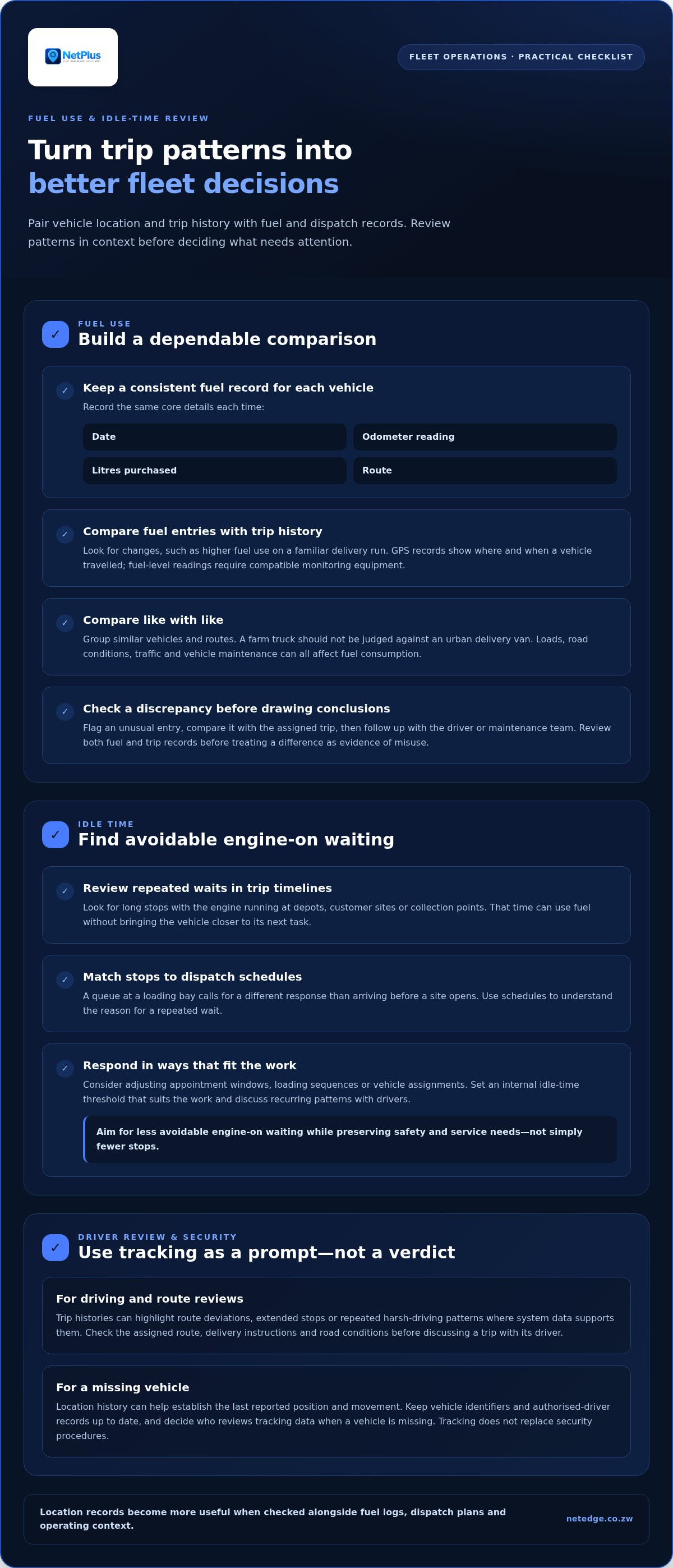
GPS records vehicle locations and trip patterns. Comparing those records with fuel logs can reveal unusual consumption. Driver movement records can support safer-driving reviews and theft investigations, but tracking alone cannot prevent theft.
Fuel Use Monitoring
Keep a consistent fuel record for each vehicle, including the date, odometer reading, litres purchased and route. Compare these entries with trip history to spot changes, such as higher fuel use on a familiar delivery run. GPS data shows where and when a vehicle travelled, while fuel-level readings require compatible monitoring equipment. Review both records before treating a discrepancy as evidence of misuse.
For a meaningful comparison, group similar vehicles and routes rather than judging a farm truck against an urban delivery van. Loads, road conditions, traffic and vehicle maintenance can all affect fuel consumption. A manager can flag an unusual entry, compare it with the assigned trip and follow up with the driver or maintenance team.
Idle-Time Reduction
Long stops with the engine running can use fuel without bringing a vehicle closer to its next task. Review trip timelines for repeated waits at depots, customer sites or collection points. Then compare those periods with dispatch schedules: a queue at a loading bay calls for a different response than arriving before a site opens.
Use the review to adjust appointment windows, loading sequences or vehicle assignments. Set an internal idle-time threshold that suits the work, then discuss recurring patterns with drivers. The goal is not simply fewer stops, but less avoidable engine-on waiting while preserving safety and service needs.
Driver Behavior Monitoring
Trip histories can help managers identify route deviations, repeated harsh-driving patterns where system data supports them, or extended stops. Treat these as prompts for coaching, not conclusions. Check the assigned route, delivery instructions and road conditions before discussing a trip with its driver.
When responding to vehicle theft, location history can help establish the last reported position and movement. Keep vehicle identifiers and authorised-driver records up to date, and decide who reviews tracking data when a vehicle is missing. These steps connect location information to a clear response process without treating tracking as a substitute for security procedures.
Businesses seeking a structured view of vehicle movement and operating patterns can explore fleet tracking information alongside their fuel and dispatch records.
What features do Zimbabwe fleet tracking systems offer?
Fleet tracking systems combine vehicle location data with tools for reviewing activity and managing operations. For a Harare delivery fleet, the useful functions may differ from those needed by a mining contractor or agricultural business.
Location and trip history: A tracking dashboard can show a vehicle’s reported position and recorded journeys. Managers can compare a planned Harare-to-Bulawayo trip with the route taken, review stops and investigate unexpected detours. Trip records also help dispatch teams understand where vehicles are during the working day.
Vehicle activity and alerts: Some systems support alerts for events such as entering a defined area or moving outside an expected schedule. These functions depend on system configuration. Identify the event that requires a response, such as a vehicle leaving a depot after operating hours, before deciding which alerts to use.
Reports and operational summaries: Reports can organise journey, stop and vehicle-use information for review. A fleet manager might compare vehicles on similar routes, then investigate differences in trip duration or stop patterns. Useful reports help teams move from an individual vehicle record to a broader view of fleet activity.
- Fuel and idle records: Where compatible data is available, managers can compare fuel entries with vehicle journeys and engine activity.
- Fleet administration: Vehicle labels, driver assignments and access permissions help teams connect records to the right work.
- System access: A dashboard should present relevant information clearly to dispatchers and managers using it.
Before selecting a system, list the decisions your team needs to make each day. A courier operation may prioritise trip progress, while a construction fleet may focus on vehicle use across sites. Match each need to a specific function, report or alert. This ties feature selection to operational tasks instead of an attractive but unused dashboard. Confirm how each feature gathers information and what vehicle equipment it requires.
How do I install and set up GPS trackers in a Zimbabwean fleet?
Begin with a vehicle register, then plan installation and system setup around each vehicle’s role. A delivery van in Harare and a service vehicle travelling between rural sites may need different reporting routines.
- Build the fleet list. Record each vehicle’s registration, make, model, assigned driver and normal work. Include cars, trucks and specialist vehicles, so every tracker can be matched to the right asset.
- Set the operational goals. Choose the decisions tracking should support, such as reviewing trip progress, checking vehicle use or managing dispatch. A fleet focused on site visits may prioritise trip history, while delivery teams may need clear vehicle assignments.
- Arrange suitable installation. Tracker placement and power connection should fit the vehicle and avoid interfering with its normal operation. Use a qualified installer who can work with the vehicle’s electrical system and explain the device’s placement and operation.
- Register each tracker. Match its identifier to the corresponding vehicle record in the tracking platform. Add relevant user access for dispatchers and managers, and avoid shared accounts that make activity harder to trace.
- Test the records. Take a known journey, such as a depot-to-customer trip, and compare its route and stops with the platform. Confirm the correct vehicle appears, timestamps make sense and authorised users can access the required view.
For a Zimbabwean fleet operating beyond major towns, include a route test on rural roads. GPS positioning and mobile data transmission are separate: location may be recorded while updates wait for network connectivity. Review how the system handles signal interruptions before relying on it for dispatch decisions.
Finish with a short operating procedure. Define who reviews trip records, how vehicle assignments are updated and how drivers are informed about monitoring. For example, a dispatcher should update a vehicle’s assigned driver when shifts change. Consistent records make reports more useful and reduce confusion in daily operations.
Use this checklist to plan a structured fleet-tracking setup: inventory, installation, account configuration, route testing and clear data practices.
Netedge Telematics: Netplus Fleet Intelligence
Netedge Telematics offers Netplus Fleet Intelligence for businesses seeking a structured way to oversee fleet operations. It is a natural next step when vehicle records, dispatch decisions and tracking information need to be managed as part of a fleet-intelligence approach.
Start by defining what your team needs to manage, such as vehicle movement, daily coordination or fleet activity. These priorities help shape how fleet intelligence fits your operating routines and what information managers need to act on. For businesses coordinating broader fleet and freight operations, Shabanq Fleets is another relevant offering. The right fit depends on the scope of operations you need to manage.
Contact Netedge Telematics to discuss how Netplus Fleet Intelligence fits your fleet operations.
Set a Clear Fleet-Management Priority
Decide which operational decision tracking should improve first. A business might start with dispatch visibility, fuel oversight or vehicle activity, then define who reviews the information and how teams will use it. This gives GPS fleet tracking in Zimbabwe a practical purpose from the outset, rather than making implementation an exercise in collecting data without a clear owner.
Netedge Telematics offers Netplus Fleet Intelligence for fleet oversight, alongside Viewplus CCTV & Security and Shabanq Fleets for related operational needs. Businesses considering GPS fleet tracking in Zimbabwe can identify the vehicles, users and workflows involved, then align the system with those priorities. A focused starting point helps teams establish a consistent process and assess whether tracking supports daily fleet management.
To discuss your fleet’s requirements and how GPS fleet tracking in Zimbabwe could fit your operations, contact Netedge Telematics. A clear first priority can help your team move toward more structured fleet operations.
Frequently Asked Questions
What GPS fleet tracking providers operate in Zimbabwe?
Netedge Telematics provides fleet tracking through Netplus Fleet Intelligence, with Shabanq Fleets supporting fleet coordination and activity monitoring. For businesses seeking GPS fleet tracking in Zimbabwe, the practical choice depends on whether the priority is vehicle visibility or broader fleet management. Define the decisions your team needs to make, then match the offering to those operational requirements.
What Zimbabwe laws and privacy rules apply to vehicle tracking?
Follow Zimbabwe’s relevant privacy and data-protection requirements, set a clear purpose for tracking, tell drivers how location data is used and restrict access to it.