
A fleet’s fuel bill shows what it spent, but not what drove the cost. Fleet tracking to reduce fuel use links vehicle movements with fuel consumption, helping managers identify patterns such as unnecessary idling, inefficient journeys and harsh driving. GPS and telematics make these patterns easier to review and address.
Fuel costs are difficult to explain when purchase records don’t show how vehicles were used. This article explains how driver behaviour, fuel management and cost-per-distance tracking can clarify the picture, and how GPS and telematics support practical decisions. Learn what to measure, how to compare performance over time and where tracking can help identify opportunities to use fuel more efficiently across a Zimbabwean fleet.
Key Takeaways
- Identify fuel-wasting habits such as prolonged idling, abrupt acceleration and harsh braking, then use driver feedback to target improvements.
- Compare fuel purchases with vehicle activity to spot unusual consumption patterns and strengthen fuel oversight.
- Track fuel spending against distance travelled to establish a cost-per-mile baseline and monitor changes over time.
- Use GPS and telematics data to connect vehicle routes, idle time and driving patterns with fuel use and operating costs.
1. What’s the Connection Between Driver Behavior and Fuel Efficiency?
Driving choices affect how much fuel a vehicle uses on the same journey. Rapid acceleration, speeding, hard braking and unnecessary idling all waste fuel. Efficient driving can improve fuel efficiency by up to 30%, while aggressive driving can reduce fuel economy by 15% to 30% at highway speeds and 10% to 40% in stop-and-go traffic. These ranges show why operational reviews should consider both driving style and route conditions.
Eco-driving gives drivers practical habits to apply on Zimbabwe’s urban roads and longer routes. Accelerate smoothly, shift up early, and use the highest gear possible without labouring the engine. Anticipate traffic and hazards so drivers can ease off and coast towards stops instead of braking hard. Where conditions allow, maintaining a steady speed also supports better fuel economy. Limiting unnecessary idling reduces fuel use, operating costs and engine wear.
Monitoring makes these habits visible. GPS and telematics reports can record speed, idle time, rapid acceleration and harsh braking. Managers can compare this information with fuel consumption, mileage and journey context to identify repeated behaviours. For example, long idle periods at the same stop may warrant route-planning changes, while frequent harsh braking may point to a need for coaching.
Driver scorecards help managers review trends consistently instead of relying on isolated incidents. Apply comparable measures across drivers, then consider route, vehicle and workload before drawing conclusions. A useful scorecard can show who may benefit from support and which habits need attention. It should guide discussion, not rank drivers without context.
Coaching works best when reports lead to a specific action. If a report shows frequent speeding, reinforce suitable speed control. If it shows abrupt starts, practise smoother acceleration. Review subsequent reports for changes in those behaviours and fuel use. This cycle of monitoring, feedback and follow-up makes driver behaviour a practical part of fuel management.
2. What Is Fleet Fuel Management?
Fleet fuel management combines fuel records with vehicle activity to explain consumption and control waste. It gives managers a consistent way to compare fuel purchases, mileage, engine idle time and driving patterns. Because vehicles may cover varied urban and intercity routes in Zimbabwe, recording route context helps distinguish operational demands from avoidable fuel use.
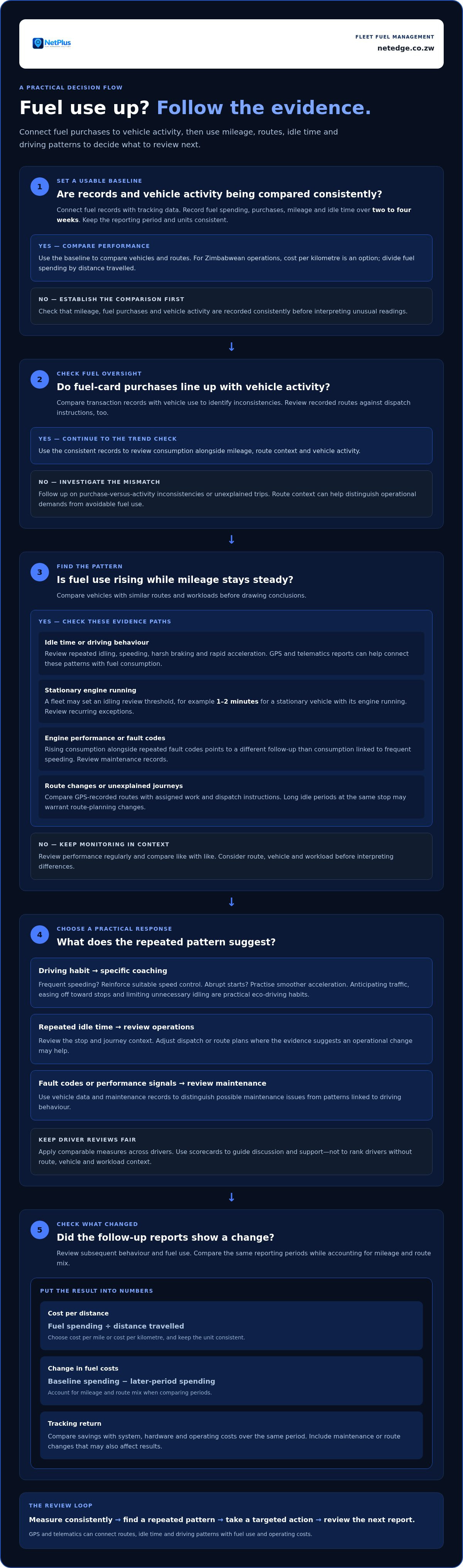
Zimbabwean fleets can use GPS tracking to review where vehicles stop, how long engines remain on, and whether journeys match assigned work. Set a clear idling threshold, such as 1-2 minutes for a stationary vehicle with its engine running, then review recurring exceptions. Compare recorded routes with dispatch instructions to flag unexplained trips for follow-up.
Telematics adds vehicle-use data to fuel records. It can monitor fuel consumption, engine performance, speeding, idle time, harsh braking, rapid acceleration and engine fault codes. These readings help managers distinguish driving-style patterns from possible maintenance issues. For example, rising fuel consumption alongside repeated fault codes calls for a different response than consumption linked to frequent speeding.
Start by deciding what data to capture. Connect vehicle tracking with fuel records, then compare fuel-card purchases with vehicle activity to spot inconsistencies. Record mileage and consumption consistently across vehicles. This creates a baseline and makes unusual readings easier to investigate. A fuel monitoring system may use vehicle data, transaction records or both; installation and calibration should suit the vehicle type and available data.
Review reports on a regular schedule and turn findings into operational actions: adjust dispatch plans, reinforce driving expectations, or schedule maintenance. Netplus Fleet Intelligence is relevant when a business needs fleet oversight; GPS fleet management can help connect vehicle activity with fuel-use reviews.
3. Fuel cost per mile and fuel-efficiency tracking
Measure fuel costs against distance travelled to compare vehicles and routes. Divide fuel spending by mileage to calculate cost per mile, or use cost per kilometre for Zimbabwean operations. Keep the unit, fuel records and reporting period consistent. Record fuel spending, purchases, mileage and idle time for two to four weeks to establish a baseline.
Use the baseline to set fuel-efficiency goals and review performance regularly. Compare vehicles with similar routes and workloads before interpreting differences. If fuel use rises while mileage stays steady, investigate idling, driving habits, route changes and maintenance records. Coaching can target a specific pattern, while follow-up reports show whether it changed.
For budgeting, use fleet reports to identify trends, forecast fuel needs and plan operating costs. Speeding burns fuel faster, even when it may save time. Set clear speed expectations within applicable road limits and compare driving reports with route conditions. Lower fuel consumption also means less fuel burned, supporting reduced fuel-related emissions.
To calculate savings, compare baseline fuel spending with spending over a later period, accounting for mileage and route mix. Subtract later spending from baseline spending to find the change in fuel costs. To assess tracking’s return, compare those savings with system, hardware and operating costs over the same period. Include maintenance or route changes that may also affect the results.
Zimbabwe’s vehicle-tracking privacy obligations depend on applicable law and how location data is collected and used. Tell drivers what is monitored, limit access to operational needs and protect stored records. Obtain legal advice for a specific compliance decision.
Tracking software and hardware costs in Zimbabwe depend on vehicle count, device requirements, installation, connectivity and reporting needs. Providers give pricing after a quote request, so compare the same requirements when assessing costs.
There is no single best provider for every fleet. Compare coverage, data accuracy, reporting functions and support against your routes and operating needs; Netplus Fleet Intelligence is one fleet-management option.
Connectivity gaps, inaccurate data and poor installation can affect tracking, while location monitoring raises privacy concerns. Review exceptions in the context of the route and vehicle before acting on a report.
4. GPS fleet tracking and telematics
GPS shows where each vehicle travels and when it stops. Compare recorded journeys with dispatch plans to identify inefficient routes, unexplained detours and possible unauthorised use. Traffic, road conditions and long intercity distances can affect journey times in Zimbabwe, so review location data alongside assigned work before identifying fuel waste.
An effective fleet tracking to reduce fuel use strategy connects vehicle locations with fuel records and dispatch decisions. Use live fleet information to assign work to an available vehicle whose location and route suit the task, reducing unnecessary travel and backtracking. When delays build along a route, managers can review alternatives and schedules rather than sending additional vehicles into the same traffic.
Telematics adds vehicle activity to location records. Reports can combine fuel use, mileage, idle time and driving style, helping managers connect fuel consumption with operational causes. For example, recurring inefficient journeys may point to a dispatch or stop-sequencing change. Fleet tracking to reduce fuel use is therefore a cycle of identifying a cause, adjusting operations and reviewing the results.
Use monthly reports to track fuel trends, driver performance and cost drivers. Compare similar vehicles and routes over time, then investigate changes instead of treating one unusual trip as a pattern. Telematics can also support maintenance planning through automated schedules. Pair service records with fuel trends and engine fault codes to investigate whether changing consumption relates to vehicle condition.
GPS explains where fuel is used, while telematics helps show how. For a practical next step, explore fleet tracking support to connect vehicle visibility with fuel-management decisions.
Netedge Telematics: Netplus Fleet Intelligence
Netedge Telematics offers Netplus Fleet Intelligence to businesses seeking greater oversight of fleet operations. It is a relevant next step when fuel records alone cannot explain how vehicle movements, routes and usage relate to consumption. GPS fleet management helps managers connect vehicle activity with operational decisions and build a clearer basis for reviewing fuel use.
Use fuel-tracking insights to identify the questions your operation needs to answer, such as where unnecessary journeys occur or which patterns warrant closer review. Netplus Fleet Intelligence is part of a wider portfolio that includes Viewplus CCTV & Security, Shabanq Fleets and CourierPlus Smart Delivery.
To discuss fleet intelligence for your operation, contact Netedge Telematics or visit netedge.co.zw.
Make fuel oversight part of the operating rhythm
Make fuel oversight a regular management practice, not a review prompted only by rising bills. Assign responsibility for reviewing fleet data, recording decisions and checking whether operational changes are sustained. This links information to action and gives managers a consistent basis for improving fleet performance over time.
For businesses considering fleet tracking to reduce fuel use, the next step is to match the system to the decisions managers need to make. Netedge Telematics offers Netplus Fleet Intelligence for live fleet visibility, vehicle tracking and actionable intelligence, alongside Viewplus CCTV & Security and Shabanq Fleets. Each offering addresses a distinct operational need, so focus on the one that fits your priorities.
Discuss your fleet’s operational requirements with Netedge Telematics and identify a suitable next step. Contact Netedge Telematics today to start the conversation and build a more informed approach to fleet management.
Frequently Asked Questions
What Is Fleet Fuel Management?
Fleet fuel management means overseeing fuel purchasing and use across business vehicles. Start by giving each vehicle a consistent record that links fuel transactions, odometer readings and assigned work. If one vehicle’s records don’t align with its work schedule, managers can investigate the discrepancy before it becomes a recurring operating issue.
How Can Vehicle Tracking Reduce Fuel Costs?
Vehicle tracking can help reduce avoidable costs by enabling dispatchers to make better use of vehicles already on the road. Before assigning a new job, for example, a dispatcher can review vehicle locations and choose one whose current route fits the task. Fewer unnecessary diversions can mean less distance travelled, while journey records help managers assess whether changes improved operating efficiency.
Can GPS tracking help prevent fuel theft?
GPS tracking can identify circumstances that warrant a fuel-theft investigation, but location data alone cannot prove theft. Managers can compare a vehicle’s recorded stops and activity with fuel purchases and assigned duties. An unexplained stop followed by a mismatch in fuel records is a reason to review transaction details, vehicle records and operational context.
Does fleet tracking work for small fleets?
Yes. A small fleet can use tracking to bring vehicle movements into one operational view without needing a large transport department. A manager responsible for several vehicles, for instance, can review which vehicle is nearest to a job and whether a planned trip took place. The right system matches the fleet’s decisions and reporting needs.
What’s the Connection Between Driver Behavior and Fuel Efficiency?
Driver behaviour affects how efficiently a vehicle uses fuel. Two drivers on comparable assignments may get different results if one accelerates sharply, speeds or leaves the engine running during stops. Reviewing behaviour alongside vehicle, route and workload context helps managers distinguish a recurring driving pattern from differences in operating conditions.
How does fleet tracking reduce fuel consumption?
Tracking supports lower fuel consumption by making vehicle activity easier to review and adjust. A manager might notice that scheduled jobs repeatedly send vehicles across the same route, then revise dispatch assignments to reduce backtracking. Tracking also provides a record to check whether the new plan changed mileage and fuel use, rather than relying on impressions.


